Pages

Showing posts with label Hyundai. Show all posts

Friday, June 10, 2011

2011 Hyundai Azera

ADVERTISEMENTS
2011 Hyundai Azera in silver color


The Azera doesn’t offer a big, thirsty V8 engine. Overall, the Azera is a practical, comfortable large sedan with a features list that approaches entry-level luxury car status, but has a sub-$30,000 price tag.


The Azera is available in two trims: a base-level GLS trim, which is very well-equipped for a base model, and a Limited trim that adds luxury features

The Hyundai Azera is a full-size luxury sedan offering from Hyundai. Despite the increase in power, new EPA fuel economy estimates for the Azera GLS are improved to 20 mpg city / 28 mpg highway.


The Azera comes standard with dual front automatic climate controls, solar control glass, power seats for driver and front passenger, as well as woodgrain and metalgrain interior accents. An AM/FM/XM Satellite Radio/CD/MP3 audio system that includes a four-channel, 172-watt internal amplifier and six speakers comes standard in the GLS. An available Infinity audio system includes a 7-channel, 315-watt amplifier with an in-dash six-disc CD changer and 10 speakers (standard in Limited trim levels).


The Azera with "Premium Package" adds leather seating surfaces, heated front seats and a power sunroof to an already loaded standard equipment package.

The "Navigation Package" includes the LG navigation system and premium 605-watt Infinity Logic 7 surround sound audio system. The six-disc CD changer is replaced by the navigation system.


It also offers a power tilt and slide sunroof, power adjustable tilt and telescopic steering wheel, power adjustable pedals, integrated memory system (power driver seat, exterior mirrors, and power tilt and telescopic steering wheel), woodgrain steering wheel and door pulls, and rain-sensing wipers.


For 2011, the Hyundai Azera gets an all-new six-speed automatic transmission; additionally, both its 3.3-liter and 3.8-liter engines have been tuned to improve both power and fuel efficiency, with decent increases on both fronts. Even base models come generously equipped with amenities such as steering-wheel-mounted audio controls and heated side mirrors. The range-topping Limited model adds luxury-car mainstays like heated leather seats and a sunroof without an exorbitant increase in price; an Azera Limited starts at just over 30 grand, making it less expensive than a base-model Toyota Avalon.


Body Styles, Trim Levels, and Options

The Azera is a full-size sedan that is offered in GLS and Limited trim levels.

The optional Premium package adds a sunroof, leather upholstery and five-level heated front seats.


The Azera Limited includes all of the above plus a larger engine, power-folding mirrors, a power rear sunshade, a power tilt-and-telescoping steering wheel, driver-seat memory functions, a wood-trimmed steering wheel and a 10-speaker Infinity stereo. The Hyundai GLS is powered by a 3.3-liter V6 that produces 260 hp and 233 pound-feet of torque. Fuel economy is an EPA-estimated 20 mpg city/28 mpg highway and 23 mpg combined. Fuel economy is only slightly lower at 19 mpg city/27 mpg highway and 22 mpg combined.


Safety

Standard safety equipment for the 2011 Hyundai Azera includes traction control, stability control, active front head restraints, front-seat side airbags, rear outboard side airbags and full-length side curtain airbags. The 2011 Azera has not been rated using the government's new, more strenuous 2011 crash testing procedures. The Insurance Institute for Highway Safety awarded the 2011 Azera its top score of "Good" for its protection of front passengers in frontal-offset crashes and a score of "Acceptable" (the second-highest rating) in side-impact testing.


The 2011 Azera's tall seating position may limit headroom for taller drivers, but aside from that, the cabin is quite spacious. When larger items need transporting, the 60/40-split rear seats fold down to further increase cargo capacity.

Post Title 2011 Hyundai Azera

ADVERTISEMENTS

Sunday, June 5, 2011

2012 Hyundai Accent

ADVERTISEMENTS
2012 Hyundai Accent front angle picture


Hyundai Motor America introduced the all-new 2012 Hyundai Accent with best-in-class standard fuel economy and power at the 2011 New York International Auto Show. This marks the U.S. debut of the latest version of the popular subcompact sedan and the new top-of-the line, more functional Accent five-door.


Accent redefines expectations in the subcompact category by offering the company's distinctive and upscale "Fluidic Sculpture" design, best-in-class standard fuel economy, exceptional roominess and a full complement of standard safety features. Despite surprising technology and a significant increase in safety features, Hyundai will hold the line on pricing from the prior generation to continue delivering unmistakable value to customers.


"The 2012 Accent reinvigorates the subcompact segment, similar to what the game-changing Sonata and Elantra have done in their categories," said Mike O'Brien, vice president, Product and Corporate Planning, Hyundai Motor America. "Accent's class-leading standard fuel economy is another showcase of Hyundai's dedication to improving fuel efficiency with advancements to traditional gasoline powered vehicles and is the fourth nameplate in Hyundai's lineup delivering 40 mpg on the highway."


ADVANCED TECHNOLOGY FOR SUPERIOR FUEL ECONOMY


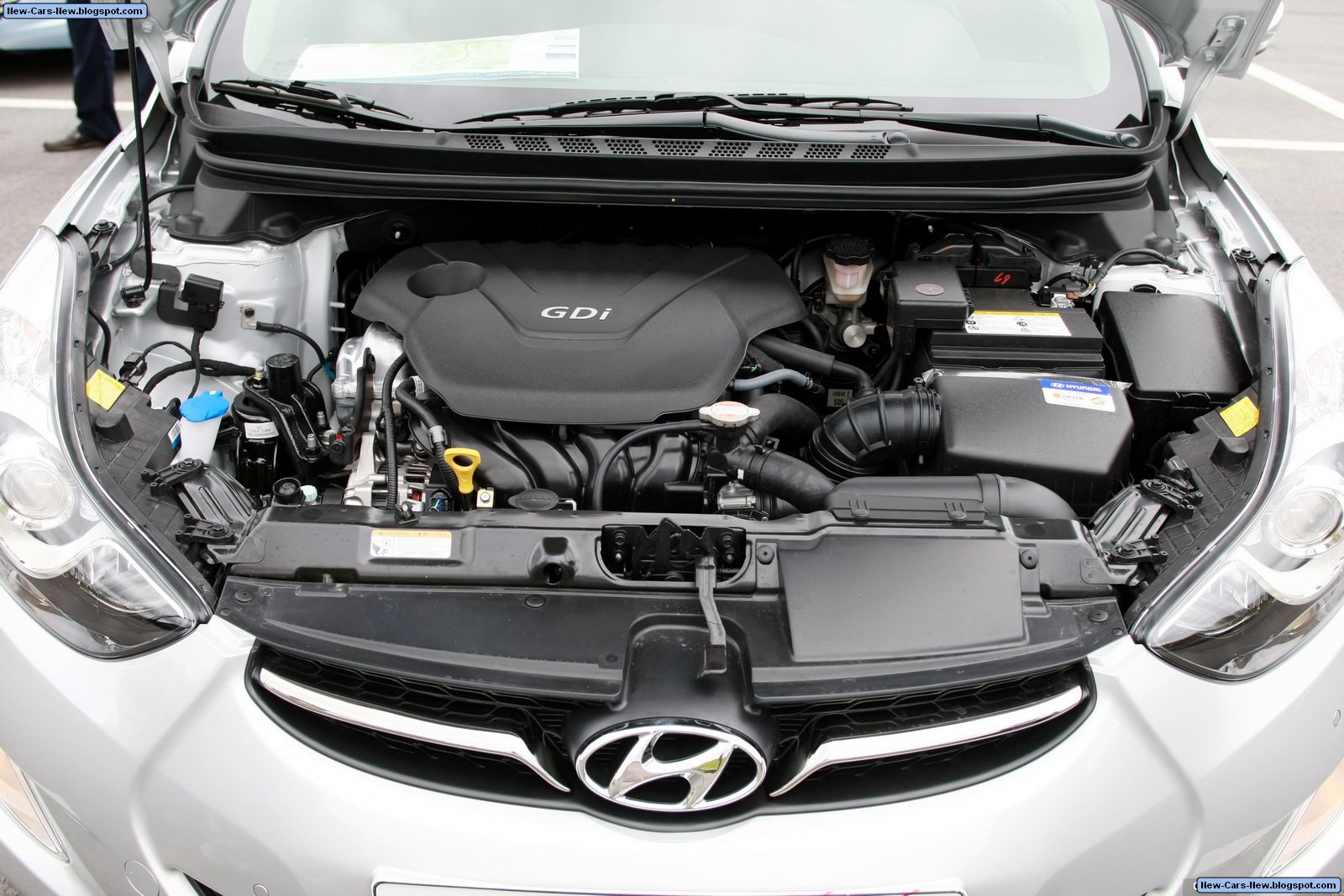
The 2012 Hyundai Accent's all-aluminum 1.6-liter Gamma four-cylinder engine utilizes the latest engine technology to deliver a class-leading 138 horsepower and 123 lb-ft of torque and a best-in-class standard 30 mpg city and 40 mpg highway fuel economy rating.The engine's most notable feature is its use of GDI, a first for the subcompact category. By precisely controlling the injection of fuel, GDI allows for better fuel economy, increased power and reduced emissions. The application of Dual Continuously Variable Valve Timing (D-CVVT) on both intake and exhaust camshafts allows for increased efficiency, improved fuel economy and reduced emissions. Other elements resulting in reduced fuel consumption include an Alternator Management System, an offset crankshaft design, variable induction system and electronic throttle control. To reduce lifetime operation costs and increase reliability, the Gamma features a maintenance-free silent roller timing chain. The Gamma also uses innovative anti-friction coatings such as CrN Physical Vapor Deposition (PVD) coating and Diamond Like Carbon (DLC) coating.


Several other systems have been improved over the outgoing model, each contributing to increased fuel efficiency. The 2012 Hyundai Accent can be equipped with a six-speed manual or automatic transaxle with SHIFTRONIC manual control, delivering smooth and efficient power delivery. Low-rolling resistance silica tires and a slippery shape (0.30 cd) reduce friction with the road and the air. This aerodynamic shape also includes a kicked up trunk edge, wheel arches which shield the tires and an optimized engine undercover. Finally, the ActiveECO function modifies engine and transmission control to smooth out throttle response. By turning on the ActiveECO function, drivers can realize up to a seven percent increase in real-world fuel economy.


Despite the additional content, safety features and technology packed into the all-new Hyundai Accent, Hyundai has avoided the typically associated penalty of increased weight. A low curb weight corresponds to an improvement not only in fuel economy but all other dynamic areas. In fact, Accent offers the best power-to-weight ratio in its class by far, providing drivers with both low fuel consumption and responsive performance. Highlights which contribute to a low curb weight include the 1.6-liter Gamma GDI engine with aluminum block that is more powerful and 40 lbs lighter than the outgoing 1.6-liter Alpha engine, monotube shock absorbers, integrated parking brake and a super flat torque converter.


40 MPG - AN 18 PERCENT IMPROVEMENT IN FUEL ECONOMY


The 2012 Hyundai Accent's highway fuel economy of 40 mpg is an 18 percent improvement over its predecessor's 34 mpg highway manual transmission fuel economy rating.


Accent's fuel economy is 30 mpg city and 40 mpg highway, with the six-speed automatic transmission or manual transmission. These figures give Accent a highway-only driving range of up to 456 miles.


SAFETY


Hyundai doesn't believe consumers should have to pay a premium for safety, so a long list of safety features is included as standard equipment on all 2012 Accent models. A total of six airbags protect occupants in the event of a collision, including two front impact airbags, two front seat-mounted side impact airbags, and curtain side-impact airbags for front and rear passengers. Accent's new standard front-seat active head restraints help prevent whiplash by automatically reducing the space between a front occupant's head and the head restraint during certain rear collisions and are highly recommended by safety organizations such as the Insurance Institute for Highway Safety (IIHS). Active front head restraints are not available on Fiesta, Yaris, Aveo or Mazda2.


The Hyundai Accent's underlying structure is engineered to protect occupants using a Collision Load Dispersion mechanism and the rear doors have internal beams. The vehicle's structure distributes the force of an impact in three ways to minimize floor deformation and maintain the integrity of the cabin.


Electronic Stability Control (ESC) and Traction Control work together to help deliver confident handling in all conditions. Vehicle Stability Management (VSM) integrates control of the ESC and motor-driven power steering (MDPS) to provide handling assistance in slippery conditions or in sudden cornering scenarios. The system can deliver up to eight Newton-meters of counter-steering effort when required to assist the driver in maintaining control of the vehicle.


A key safety element for any vehicle is its braking system. Hyundai Accent is the only car in the subcompact segment to offer four wheel disc brakes as standard equipment. An Anti-lock Braking System (ABS) featuring Electronic Brake Force Distribution (EBD) and Brake Assist (BA) is also included. EBD examines the effect of vehicle load on weight distribution and apportions the braking force between front and rear axles to maximize stopping ability. In the event of a panic stop, BA ensures that maximum braking force is applied.


SMALL ON THE OUTSIDE, BIG ON THE INSIDE


All Accents ride on a 101.2 inch wheelbase, 2.8-inches longer than the previous generation. The 66.9-inch width on all 2011 models increased by 0.2 inches for 2012. The Hyundai Accent 4-door's overall length has increased by 3.5 inches to 172 inches. Total length of the new five-door version is 162 inches. As a result, Accent enjoys superior interior volume and passenger space. While the car's exterior dimensions are consistent with those of traditional subcompacts, Hyundai Accent is classified by the EPA as a compact sedan thanks to its interior volume. Toyota Yaris and Ford Fiesta are classified as subcompact cars. In addition the Hyundai Accent five-door has best-in-class cargo volume and more cargo capacity than the Nissan Juke and Infiniti EX 35 crossover. The Accent has best-in-class front and rear shoulder room and the five-door also has more cargo volume than many of its compact five-door competitors.


CONFIDENT DRIVING DYNAMICS


The first step toward confident driving dynamics is a rigid structure. To this end, the 2012 Hyundai Accent employs high-tensile strength steel to deliver a strong, light and stiff body which is 22 percent stiffer than the previous generation. Increasing the stiffness of the structure allowed Hyundai engineers more flexibility in terms of suspension tuning. The end result is a better balance between handling precision and ride comfort. Accent employs a MacPherson strut front suspension with coil springs and twin-tube gas shock absorbers. The rear suspension is a torsion axle setup with coil springs and monotube shock absorbers.


All Accents have column-mounted, motor-driven electric power steering that adjusts instantly to changing driving conditions while improving fuel economy over a conventional steering system. Hyundai Accent's turning diameter of 34.1 feet is better than Versa, Fiesta and Fit. The SE five-door model has a unique steering calibration for a sportier feel.


FLUIDIC SCULPTURE DESIGN


The 2012 Hyundai Accent joins the Hyundai line-up sporting the company's increasingly popular "Fluidic Sculpture" design. The vehicle's exterior lines are intended to be futuristic, dynamic, and sleek. In a segment typically associated with staid designs, Accent stands out from the crowd. While the styling provides an attractive form, it's also functional, featuring a slippery 0.30 coefficient of drag for Hyundai Accent sedan and .31 for Accent five-door. Hyundai's signature hexagonal front grille and detailed swept-back headlights give Accent a compact athletic face. Five-door SE models include a sporty roof-mounted spoiler and vertical taillights. For an assertive stance, 16-inch alloy wheels are available on GLS and standard on SE.


COLOR PALETTE


The 2012 Accent GLS is available with gray or beige two-tone interior. The five-door GS and SE trims are available with a gray interior or a monotone black interior. All Accents have cloth-like pillar trim made of fibrous tissue and volcanic rock for a premium look and feel.


The Hyundai Accent features a bold exterior color palette with both light and dark colors including Century White, Ironman Silver, Cyclone Gray, Ultra Black, Boston Red, Mocha Bronze, Marathon Blue, Clearwater Blue and Electrolyte Green.


FEATURES AND AMENITIES WORTHY OF MORE EXPENSIVE CARS


Choosing a subcompact sedan no longer means foregoing comfort and convenience features. The 2012 Accent will be offered in three trim levels. The affordable four-door GLS, the versatile, well equipped five-door GS and the sporty five-door SE. The entry level Hyundai Accent three-door has been discontinued for the 2012 model year.

Post Title 2012 Hyundai Accent

ADVERTISEMENTS

Monday, April 4, 2011

2011 Hyundai Avante

ADVERTISEMENTS
2011 Hyundai Avante front view


Some unconfirmed news are coming out stating that Hyundai are planning to launch their globally accepted sedan Hyundai Elantra in the Indian automobile field as Hyundai Avante. Few Years ago, Hyundai India have launched a sedan Hyundai Elantra, but it was a major flop. This new Avante in India looks rich in style, great in it's performance, comfort, features and full value for money.


This new Hyundai luxurious sedan, Avante is powered by a 1591cc, DOHC, CVVT Petrol engine which will provide a maximum power of about 118 Bhp @ 6200 rpm and a maximum torque of about 156 Nm @ 4200 rpm. This new Hyundai Avante will provide a mileage of about 11 kmpl in the cities and about 14 kmpl in the highways. This new Avante is also said to achieve a top-speed of about 185 kms in perfect running conditions.


This new Avante, a luxurious sedan belonging to the D segment of the Indian automobile field provides Five-speed Manual Gearbox. This new Hyundai Avante includes McPherson Strut Type, Stabiliser Bar Suspension. It also provides a Disk Brake at the front and a Drum Brake at the rear.

Post Title 2011 Hyundai Avante

ADVERTISEMENTS

Sunday, April 3, 2011

Hyundai Blue2 Concept

ADVERTISEMENTS
Hyundai Blue2 Concept in white & blue colour


Hyundai Motor staged a world premiere of its new concept car, Blue2 (codenamed HND-6), a mid-size FCEV which shows a blueprint for future sedans. The name "Blue2" is a combination of Hyundai’s sub eco-brand ‘Blue Drive’ and the number "2" from H2, the symbol for hydrogen gas.


Aiming at gaining early leadership of the FCEV market, Blue2 is powered by a fuel cell electric system that delivers a stack power of 90kW(1.65kW/L) and fuel economy of 34.9km/â„“. The Blue2 is materialized in a sporty and luxurious style, a combination of futuristic, flowing designs and eco-friendly features. The Blue2 is equipped with low-resistance tires and alloy wheels which are designed to improve aerodynamic performance, while the car’s interior design encompasses a futuristic look by using eco-friendly new materials.


Hyundai’s concept keywords for the exterior design are ‘Intersected Flow,’ featuring innovative and dynamic designs. The vehicle’s condition is visible via unique and futuristic images on the exterior of the car through outside LED screen panels, which are located on both the front and rear of the car. Blue2 also features a welcome system which recognizes the driver, while an automatic opening door system enhances the driver’s convenience. Conventional side mirrors are replaced by side cameras and a roof camera, offering a state-of-the-art driving environment.


The exterior designs flow inside the vehicle, with asymmetrically-designed dashboards and doors to optimize a driver’s convenience and add emotional value. Wider seats enable people to get in and out of the vehicle more comfortably.


Hyundai combined the cluster and center fascia, applying an advanced Transparent Organic Light Emitting Diode (TOLED) monitor and ultra-light tempered glass, called Gorilla® Glass, providing more accurate and vivid graphic information. The infotainment system is operated by a Motion Sensor Moustick, a haptic wheel and motion sensor that respond to the driver’s touch and hand movements, respectively, giving drivers a new experience.


Blue2 aims to satisfy all the senses of future drivers, including the air they breathe: A cluster ionizer freshens the air inside the vehicle, while antibacterial genuine leather with leaf-shaped patterns, called ‘eco-graphic perforation,’ enhances an eco-friendly look and feel.

Post Title Hyundai Blue2 Concept

ADVERTISEMENTS

Tuesday, March 8, 2011

2012 Hyundai i40

ADVERTISEMENTS
pic of front left side 2012 Hyundai i40


The all-new Hyundai i40 will be available with a choice of four Euro V-compliant engines: two petrol and two diesel. These units cover a power spread of 115 ps to 177 ps, with torque delivery extended across a wide engine-speed range, making the 2012 i40 an enjoyable car to drive around town or on the motorway. Manual and automatic transmissions will also be offered.


Hyundai’s all new four-cylinder 2-litre GDI engine, called ‘Nu’, makes its debut in the Hyundai i40, promising deliver higher torque (for enhanced driveability), improved fuel economy and reduced emissions, plus undiminished durability and excellent NVH characteristics – similar to the multi-point fuel injected engine.


Equipped with GDI (gasoline direct injection) this 1,999 cc unit generates 177 ps and 213 Nm of torque which ensures that the i40 boasts best-in-class performance and fuel economy. An Hyundai i40 with this engine and a six-speed manual gearbox will accelerate to 130 kph (81 mph) in just 15.7 seconds, record fuel economy figures of 6.7 l/100 km (combined cycle) and achieve a CO2 rating of just 156 g/km.


Overall, Hyundai is expecting a 65/35% spread between diesel and gasoline-powered i40 sales.

Post Title 2012 Hyundai i40

ADVERTISEMENTS

Monday, February 28, 2011

2011 Hyundai Elantra - Los Angeles Auto Show

ADVERTISEMENTS
Hyundai Elantra front siver


Hyundai today introduced another exciting model, its all-new 2011 Elantra at the Los Angeles Auto Show. This marks the world debut of the latest version of the popular compact sedan. The 2011 Hyundai Elantra encompasses Hyundai's latest ambitions including "Fluidic Sculpture" design, advanced safety and fuel efficiency. In the very competitive compact car segment the Elantra continues to be on a fast four year lifecycle.


HIGHLIGHTS FOR 2011 ELANTRA


* All-new fifth generation Hyundai Elantra compact sedan


* "Fluidic Sculpture" design


* Launches with new 1.8-liter "Nu" engine and in-house six-speed automatic transmission


* 40 mpg highway on all models with A/T or M/T


* Best-in-class standard fuel economy


* Improved fuel efficiency by up to 18 percent over its predecessor


* More fuel efficient than Honda Civic and Toyota Corolla


* Production began at Hyundai Motor Manufacturing Alabama in November with shipments to dealers before year-end


* "Class-above" mid-size car interior volume


* Standard VSM, ESC, TCS, ABS with Brake Assist and EBD


* Touch-screen navigation with rearview camera and iPod®/USB inputs


* Bluetooth® hands-free phone system with voice recognition


* Segment first: Heated rear seats


2011 Hyundai Elantra is the fourth vehicle in Hyundai's 24/7 version 2.0 product initiative (seven new models in the next 24 months), following on the heels of the all-new Tucson, Sonata and Equus.


The 2011 Elantra represents a modern approach to the traditional compact sedan segment, using emotional design and luxury features offered with Hyundai's strong value proposition. The Hyundai Elantra poses some intriguing questions:


* Why can't a compact car have modern, sleek, sophisticated style?


* Why pay luxury car prices to get advanced safety features?


* • Why buy a mid-size sedan when you can get exceptional room in a compact car?


* Why can't a compact car get subcompact car fuel economy?


HYUNDAI "FLUIDIC SCULPTURE" DESIGN


2011 Elantra exemplifies Hyundai's emotional "Fluidic Sculpture" design principles. "Fluidic Sculpture" considers the interplay of wind with rigid surfaces to create the illusion of constant motion. Elantra is an evolution of the design qualities found in Sonata.


Successful sedans in the U.S. market all have a distinct silhouette and Day Light Opening (DLO - a designer's term for the side glass) and Elantra is no different. Along Elantra's sides are Sonata's flowing lines, with the addition of a strong undercut feature line starting at the front door. These lines, along with muscular wheel arches and a sleek roofline, create a memorable and spacious package. Flowing lines also lead to an aerodynamic body. The drag coefficient for the Elantra is an exceptionally low 0.28 that compares favorably to the Chevrolet Volt (0.29).


Hyundai's signature hexagonal front grille and detailed swept-back headlights give Elantra a compact athletic face. The assertive stance is complimented by 15-, 16- or 17-inch alloy wheels and athletic proportions. Available fog lights and side repeater mirrors complete the distinct design. Elantra was designed at Hyundai's North American Design Center in Irvine, Calif.


40 MPG - AN 18 PERCENT IMPROVEMENT IN FUEL ECONOMY


2011 Elantra's fuel economy is 29 mpg city and 40 mpg highway, with the six-speed automatic transmission or manual transmission. These figures give Elantra a highway-only driving range of up to 500 miles.


40 MPG POWERTRAIN


Under the hood, the Elantra is powered by an all-new 1.8-liter Nu four-cylinder engine with 148 horsepower and 131 lb-ft of torque (145 horsepower and 130 lb-ft of torque for Elantra PZEV). The Nu engine was developed to replace the 2.0-liter Beta engine from the previous generation Elantra. The Nu is smaller in size, weighs 74 pounds less and helps achieve an 18-percent improvement in highway fuel economy, when compared with its predecessor. Thanks to advanced clean engine technology, most Elantras sold in California, Oregon and several Northeast states are certified as Partial Zero Emission Vehicles (PZEV) by the EPA. The PZEV Elantra is as clean as many hybrid electric vehicles. The PZEV Elantra helps Hyundai meet its environmental commitments. Outside of these "green" states, the 2011 Hyundai Elantra is available as an Ultra Low Emission Vehicle (ULEV).


Key Engine Components


* Aluminum block and head


* Dual Continuously Variable Valve Timing (D-CVVT)


* Variable Induction System (VIS)


* Roller swing arm and Hydraulic Lash Adjusters (HLA)


* Electronic throttle control


* Offset crankshaft


The Nu engine features an aluminum block with a cast iron cylinder liner, cylinder head and crank. This unique configuration results in a block that is 30 percent lighter than an iron block, shedding more than 74 pounds off the entire engine weight, while still providing comparable strength.


The 1.8-liter Nu also offers Dual Continuously Variable Valve Timing (D-CVVT) camshafts and hydraulic engine mounts for optimum power, efficiency and refinement. Using D-CVVT on both camshafts has several advantages when compared with using it just on the intake camshaft. They include a two percent improvement in performance (increased volumetric efficiency), two percent improvement in fuel economy (reduced pumping loss) and a 30 percent reduction in hydrocarbon emissions. In the valvetrain, roller swing arms and hydraulic lash adjusters reduce valve driven friction to improve fuel economy one percent compared with direct valve driving. The Nu engine also features a maintenance-free silent timing chain system to enhance durability and improve Noise Vibration and Harshness (NVH).


The application of a plastic two-stage Variable Intake System (VIS), enables switching between long and short intake manifolds, resulting in an across-the-board performance increase. These result in a four percent improvement in performance, a 15 percent reduction in cost and 30 percent reduction in weight, when compared with aluminum.


Another tool Hyundai engineers have incorporated into the next generation Elantra is an electronic throttle control. The electronic throttle control replaces the conventional cable and mechanical linkage found in the previous generation Elantra with fast responding electronics. This system accurately controls air intake and engine torque, improving drivability, response and fuel economy.


Hyundai's first application of double-pipe plumbing (internal heat exchanger) is found in Elantra. Double-pipe plumbing improves cabin cooling performance, while minimizing the capacity of the compressor, which further reduces fuel consumption. An external controlled variable compressor is also used to improve fuel efficiency versus an internal variable compressor.


The Nu four-cylinder engine also has an offset crankshaft design that reduces friction between the piston and cylinder wall for a one percent improvement in fuel economy.


SIX-SPEED TRANSMISSIONS


The 2011 Elantra can be equipped with a six-speed manual (M6CF3-1) or automatic (A6GF1) transaxle with SHIFTRONIC manual control. The 2011 Elantra is the first small car in the Hyundai lineup to receive a six-speed automatic. Hyundai now has its own six-speed automatic transmissions in its small, medium and large FWD cars. Hyundai is also only one of four global car manufacturers building their own unique six-speed automatic transmissions.


The all-new six-speed automatic is 11 pounds lighter than Hyundai's global five-speed and 17 pounds lighter than the five-speed automatic found in Honda Civic. It is considerably simpler, having 62 fewer parts, which is a key to increased durability, lighter weight and lower cost. It also features a super flat torque converter that shortens the unit's overall length by 0.43 inches, while being 2.6 pounds lighter.


This transmission mated to the 1.8-liter Nu engine helps Elantra deliver improved fuel efficiency - 11 percent more than its closest competitors and a four percent gain in fuel economy.


The 2011 Elantra's six-speed manual transmission is also all-new and provides crisp shifts and further optimizes engine performance. These crisp shifts are courtesy of triple-cone synchronizers for first and second gears, double-cone for third gear and single-cone for fourth, fifth and sixth gears.


OVERALL DIMENSIONS


The all-new Elantra rides on a 106.3-inch wheelbase, just two-inches longer than the previous generation. Its overall length has increased by 0.9 inches to 178.3 inches, with the 69.9-inch width remaining the same. The height has been lowered by 1.8 inches to 56.5 inches, without affecting headroom. Consequently, Elantra maintains its "class above" status when it comes to interior room, in comparison to Honda Civic and Toyota Corolla. In fact, the Elantra is so roomy the U.S. Environmental Protection Agency (EPA) classifies it as a mid-size car, not a compact car like Civic and Corolla.


2011 Elantra's total interior volume of 110.4 cubic feet beats the 2011 Honda Civic sedan, 2011 Nissan Sentra, 2011 Chevrolet Cruze, 2011 Ford Focus and 2011 Toyota Corolla. Surprisingly, it even surpasses the Acura TSX (107.1 cu. ft.), Nissan Maxima (110.0 cu. ft), and VW Passat CC (109.3 cu. ft.) in total interior volume. Ultimately, the long wheelbase allows for compact car efficiency with mid-size car comfort. An example of this is found in the long seat track, delivering best-in-class front seat legroom. Hyundai Elantra's trunk volume at 14.8 cubic feet also beats Civic and Corolla.


2011 ELANTRA ARCHITECTURE


The all-new Elantra is fitted with a McPherson strut front suspension, with coil springs and gas shock absorbers. The rear suspension is a light weight coupled torsion beam rear suspension for enhanced steering stability and monotube shock absorbers for ride comfort. A 23.0 mm diameter front stabilizer bar helps reduce body roll when cornering.


All Elantras have column-mounted, motor-driven electric power steering that adjusts instantly to changing driving conditions while improving fuel economy over a conventional steering system. A quick-ratio steering rack is used for crisp feel on turn-in. Elantra's turning diameter of 34.8 feet is better than Corolla's at 35.6 feet.

World-class weight efficiency was one of the program targets for the Hyundai Elantra engineering team. In fact, the 2011 Elantra leads all of its competitors in weight efficiency. Hyundai engineers also targeted leadership in power-to-weight ratio. Having these targets paid huge dividends in both performance and fuel economy.


The Elantra's widespread use of high-strength steel provides a 37 percent increase in body stiffness at a lower body weight. High-strength steel allows the suspension to work optimally. At 2,701 pounds, the automatic transmission Elantra GLS is lighter than its competitors, while offering more interior room than Focus, Cruze, Civic and Corolla, with body-bending rigidity 50 percent higher than the Corolla. This weight efficient unibody architecture allows for Elantra to achieve an estimated 40 mpg EPA highway rating, without the need for a special eco model.


MODERN, SOPHISTICATED INTERIOR


Inside the Elantra, customers will find Hyundai's expertise in interior packaging, lighting, leading-edge design and craftsmanship. This approach is visible in the clarity of the instruments and the tilt and telescopic steering wheel. The seats help fuel economy and the environment, being made of lightweight, environmentally friendly foam. Heated seats are available in the front and the rear, a segment first. Not only does Elantra have multiple storage areas, but it delivers useable storage capacity.


The 2011 Elantra GLS has a two-tone interior. Gray and beige are the two GLS interior color choices. The Limited trim adds a monotone black interior. All Elantras have cloth-like pillar trim made of fibrous tissue and volcanic rock for a premium look and feel.


Elantra is available with two audio systems. Standard is a 172-watt AM/FM/Satellite Radio/CD/MP3 audio system with six-speakers and iPod®/USB/auxiliary input jacks. A 360-watt system with external amplifier is optional.


Touch-screen navigation is available on GLS and Limited trims and includes a high-resolution 7.0-inch screen and voice-activation by headliner-mounted microphone. The sound system plays compact discs, accesses digital music files via Bluetooth streaming audio or allows driver and passenger to access their personal listening devices through the iPod/USB/auxiliary inputs. Bluetooth audio wirelessly streams music from select mobile phones to the head unit. The XM Satellite Radio interface is also integrated into the navigation unit and features channel logos, real-time NavTraffic and XM Data services, such as XM NavWeather®, XM Stock Ticker and XM Sports Ticker. The system also integrates a rear-view camera, which cannot be found on the Honda Civic or Mazda 3. Users can even upload personal pictures from a USB rather than a CD to be displayed on the system's home screen.


Elantra owners can also get premium features, such as a proximity key with push button start and immobilizer, power sunroof, one touch driver's window and leather seating surfaces.


This modern, sophisticated interior is also whisper quiet. Engineers worked hard on reducing noise and vibrations inside the cabin.


NVH COMPARISONS


The all-new Elantra is fitted with a McPherson strut front suspension, with coil springs and gas shock absorbers. The rear suspension is a light weight coupled torsion beam rear suspension for enhanced steering stability and monotube shock absorbers for ride comfort. A 23.0 mm diameter front stabilizer bar helps reduce body roll when cornering.


ADVANCED STANDARD SAFETY TECHNOLOGIES: PART OF HYUNDAI'S ASSURANCE COMMITMENT


Elantra was one of the first compact sedans with ESC when it launched in July of 2007. The 2011 Elantra now takes compact car safety to the next level with the introduction of Vehicle Stability Management (VSM). Similar to the one found in the Hyundai Equus, VSM optimally manages ESC (Electronic Stability Control) and the Motor-Driven electric Power Steering (MDPS).


VSM works to control two effects. The first is when a driver accelerates or brakes on a split-mu surface (slippery on one side, dry pavement on the other) and the vehicle wants to pull in one direction. VSM detects this condition and sends a signal to the MDPS to apply steering assist. VSM counters the pull and automatically provides 8 Newton meters of counter steering. VSM reacts the same way during sudden lane changes or fast cornering. ESC is still not standard on the 2011 model year Civic.


Elantra features six airbags-including dual front, front seat-mounted side-impact, and front and rear side curtain airbag.


The Elantra also features a state-of-the-art braking package. The package includes four-wheel disc brakes (Civic, Jetta and Corolla still feature rear drum brakes) and an Anti-Lock Braking System (ABS) including Brake Assist, which provides maximum braking force when a panic stop is detected, and Electronic Brake-force Distribution (EBD), to automatically adjust the braking force to front and rear axles based on vehicle loading conditions. This package delivers shorter braking distances from 60 miles per hour than Civic, Corolla and Mazda 3.


Elantra engineers even looked at something as simple as the parking brake, having introduced Hyundai's first integrated rear parking brake caliper for weight reduction.


In terms of passive safety, the Elantra has strong unibody construction, along with front and rear crumple zones and the rear doors have internal dual beams unlike some of its competitors.


2011 ELANTRA PRICING


The all-new Elantra offers modern design, loads of comfort and convenience features, and is an outstanding weapon against gas prices all with a low starting price of $14,830.

Post Title 2011 Hyundai Elantra - Los Angeles Auto Show

ADVERTISEMENTS

Sunday, February 13, 2011

2011 Hyundai Santa Fe

ADVERTISEMENTS
2011 Hyundai Santa Fe 1ba


Here are the picture that finally confirm drivers can expect a whole lot more from the next generation Hyundai Santa Fe.

These prototypes are almost totally undisguised, and clearly reveal a range of new details while also offer a first look at the car's uprated interior.

At the front, there's a new grille as well as new headlights while around the back the spacious SUV gets a new set of very flashy taillights.

A redesigned bumper should also be in store. The Santa Fe is currently offered with a 2.2-litre diesel engine, and that looks unlikely to change in the near future.

However, the firm has promised a raft of new hybrid models.

Post Title 2011 Hyundai Santa Fe

ADVERTISEMENTS

Sunday, January 16, 2011

Hyundai Equus by Rhys Millen Racing

ADVERTISEMENTS
Hyundai Equus


Hyundai announced recently that it will show a Rhys Millen Racing version of the Equus at the 2010 SEMA Auto Show next month. The RMR Signature Edition Equus will include exterior, interior and performance upgrades that will enhance the already luxurious sedan.


Exterior changes to the Equus include front chin and rear deck spoilers, carbon mirrors and a two-tone carbon fiber and "Red Bull Racing blue" paint job, plus 21-inch HRE wheels.


A new intake and exhaust system add 30 hp, for a total of 415 hp from the 4.6-liter V-8, while 14-inch front brake discs bring things to a halt. It’s not our cup of tea—we’d have attached the Korean-market hood ornament and called it a day—but it should be right at home among the bewinged and neon-lighted creations that dominate SEMA.


The car also gets two-tone carbon-fiber mirrors, front and rear spoilers and a leather interior with suede accents. It rolls on 21-inch wheels.


Press Release


RHYS MILLEN RACING BUILDING SIGNATURE EDITION EQUUS FOR SEMA


Visitors to Hyundai's SEMA booth will be treated to the latest customizations from Rhys Millen Racing as his modifications to the company's new flagship sedan will be unveiled. The RMR Signature Edition Equus will include exterior, interior and performance upgrades that will enhance the already luxurious sedan.


"This is the third consecutive year we've partnered with Hyundai to bring a must-see car to the SEMA Show," said Rhys Millen, owner, Rhys Millen Racing. "The intelligent luxury platform of the new rear-wheel drive Equus is a perfect vehicle for tuners who have graduated from other segments and want to work with the best the automotive industry has to offer."


The Equus will showcase exterior RMR Signature Edition components including carbon mirrors, and front chin and rear deck spoilers. A two-tone carbon fiber and Red Bull Racing blue satin clear paint by BASF and HRE 21-inch P40 wheels will appropriately round out the exterior.


Tuners aiming to get even more power from the stock 385 horsepower, V8 engine to the wheels will get a glance at a bolt-on RMR Signature Edition air intake and stainless exhaust that together will add another 30 horsepower. The RMR Signature Equus will also feature a 14-inch brake kit designed to tame the 415 horses.


The interior of the Equus will feature RMR Signature Edition embroidered headrests and floor mats, and ostrich hide leather seats with suede accents.


The RMR Signature Edition Equus will be shown in the Hyundai Booth along with other specially designed cars exclusively built for this year's SEMA Show.

Post Title Hyundai Equus by Rhys Millen Racing

ADVERTISEMENTS

Tuesday, October 26, 2010

2011 Fiorucci Hyundai i10

ADVERTISEMENTS
0


This time, Hyundai’s Italian arm partnered with Milanese fashion brand Fiorucci to create a special series of models based on the i10 city car and the larger i20 supermini. Both models by Fiorucci are characterized by the unique color combos inside and out as well as their upgraded standard equipment and the use of exclusive materials in the cabin.

Post Title 2011 Fiorucci Hyundai i10

ADVERTISEMENTS

Sunday, October 24, 2010

New 2011 Hyundai Equus

ADVERTISEMENTS
Hyundai surprised the automotive world when displayed the 2011 Hyundai Equus at the 2009 New York Auto Show. The success of the Hyundai Genesis sedan, however, has the Korean automaker thinking big. If Americans will embrace the Genesis as a Hyundai luxury car with a price tag as high as $40,000, some ask, what's to stop them from embracing a more luxurious model a step up the food chain wearing a Hyundai badge?


The Genesis offers some equipment found only on $50,000 luxury cars in a $32,000 to $40,000 price range. The Genesis appears to be convincing skeptical auto writers and skeptical car shoppers that Hyundai can build a bargain luxury car.


In Asian markets, this car is sold as an alternative to the Mercedes-Benz S-Class and Lexus LS - a super-luxury car with a sticker price approaching six figures. Would Americans accept a six-figure Hyundai?


The Genesis succeeds by offering a BMW 5-Series-like experience for the price of a 3-series.

Standard Equus features like a massaging driver seat, lane departure warning, adaptive cruise control and a 17-speaker surround-sound audio system are usually options on even high-end luxury cars. Hyundai even plans to supply Equus owners with an Apple iPad as a standard feature, which will function as a sort of interactive owner's manual and maintenance minder.


Even with this minor demerit, the 2011 Hyundai Equus is a genuine competitor to other luxury sedans, both midsize cars like the BMW 5 Series and Mercedes-Benz E-Class and flagships like the BMW 7 Series and Mercedes S-Class. The "Hyundai Equus" is a large luxury sedan available in Signature and Ultimate trim levels. The Equus Ultimate seats four, as the rear bench seat is replaced with a pair of reclining bucket seats with heating/cooling/massaging functions and a passenger-side power footrest. This rear-wheel-drive car is equipped with a six-speed automatic transmission. According to Hyundai estimates, the Equus will achieve 16 mpg city/24 mpg highway and 19 mpg combined.


The 2011 Hyundai Equus comes standard with stability and traction control, antilock brakes, electronic seatbelt pre-tensioners, active front head restraints, a lane-departure warning system, front and rear parking sensors, a rearview camera, a driver-side knee airbag, front and rear side airbags, and side curtain airbags.


If you're wondering whether a value-oriented brand like Hyundai can produce a luxury car, the cabin of the Equus will put your mind at ease. The passenger-side rear seat even has a power-operated footrest. In its home market of South Korea, the Hyundai Equus Ultimate is frequently used as a VIP limousine.

Post Title New 2011 Hyundai Equus

ADVERTISEMENTS

Friday, October 22, 2010

The New Hyundai QarmaQ

ADVERTISEMENTS
Hyundai QarmaQ


Hyundai has presented at the Geneva Show the series model i30 hatchback and Hyundai QarmaQ concept.The crossover Concept, which has been announced in a sketch published a few weeks ago by Hyundai, brings an important change of approach in what concerns the materials used in its composition.While the traditional cars use metal and glass, QarmaQ is assembled from plastic materials made by GE Plastics. The Hyundai QarmaQ concept is the result of the cooperation between the 2 companies and brings, as novelty, a vista of the kind that only a view from the chopper gives, because of the great surface of the plasticized windows from the car's body.By integrating GE's polycarbonate glazing wrap-around and the GE Lexan windscreens, the body weight of the cars is reduced by almost 50 %. A unique technology characterizes Lexan screens: Exatec Technology. It' s a technology through which a thin, protective layer of glass is deposited on the screen, which helps when protecting from scratching or effects of humidity. The material, much lighter than traditional glass used in automotive industry, also increases the impact resistance and both occupant and pedestrian safety. When talking about pedestrian safety, we can also mention the system that uses deformable sections under the concept's body panels, which is able to absorb crush energy in case a collision with a person may happen.GE Plastics' High Performance Thermoplastic Composite (which is used for the horizontal body panels) manages to also save some weight. 900 recycled plastic bottles have been used when manufacturing other body panels.The new concept is a showcase of 30 new technologies that will be found in the future Hyundai models. The car is the result of the hard work of Hyundai Motor Europe's Design and Technical Center and it has been engineered in cooperation with GE Plastics. It will be ready to roll in 2008 to 2014

Post Title The New Hyundai QarmaQ

ADVERTISEMENTS

Wednesday, September 22, 2010

Hyundai ix20 (2011)

ADVERTISEMENTS


Post Title Hyundai ix20 (2011)

ADVERTISEMENTS

Thursday, August 26, 2010

Hyundai RB Concept (2010)

ADVERTISEMENTS


Post Title Hyundai RB Concept (2010)

ADVERTISEMENTS

Wednesday, August 4, 2010

Hyundai Avante (2011)

ADVERTISEMENTS


Post Title Hyundai Avante (2011)

ADVERTISEMENTS

Wednesday, July 21, 2010

2012 Hyundai Veloster

ADVERTISEMENTS
2012 Hyundai Veloster car


Front wheel drive 2012 Hyundai Veloster are out and this sports coupe looks as good. Despite the test vehicle being camouflaged in black, Hyundai’s Veloster lives up to the expectations with its 2+2 seating after the Concept version released at the 2007 Seoul Auto Show. Besides an attractive exterior body style, the side windows are much improved- they stretch beyond the B-pillar. The tail lamps are positioned on the rear plane. The sides are taller with a long roof and a steeply raked windshield. The front and rear fenders have been made less fat and toned down.  The dramatic stance is heavily brought down and it leaves car lovers slightly disappointed, especially people who were hoping for the next Honda CRX. The Veloster is inspired by the Hyundai Accent and is slightly longer than the Mini Cooper, while still retaining 70 percent of the Concept’s styling. It looks really small and comes with a host of power improvements in the form of the pretty decent 2.0-liter turbocharged four-cylinder engine, gasoline direct injection (GDI technology). The power figures are a neat 138 hp and 136 lb-ft of torque. There is also a choice of a dual-clutch automatic transmission or one can have manual transmission as well with an entry level power plant of over 40 mpg. Expected to hit the roads soon sometime later this year or early 2011, the Veloster is pegged at a neat price of US $18,000.

Post Title 2012 Hyundai Veloster

ADVERTISEMENTS

Thursday, July 15, 2010

2009 Hyundai Blue-Will Concept

ADVERTISEMENTS
2009 Hyundai Blue Will Concept


The BLUE-WILL concept is powered by an all-aluminium Gasoline Direct Injected 1.6-litre engine which is coupled to a Continuously Variable Transmission and a 100kw electric motor which is at the heart of Hyundai's parallel hybrid drive architecture. Electric power, stored by a Lithium Ion Polymer battery pack, is neatly bundled with the fuel tank under the rear seat to maximise luggage space. Hyundai will be the first automaker in the world to apply Lithium Ion Polymer in a mass production vehicle when the Elantra LPI Hybrid goes on sale in Korea in July this year.

Post Title 2009 Hyundai Blue-Will Concept

ADVERTISEMENTS

Sunday, June 27, 2010

Hyundai Blue Will Hybrid Car

ADVERTISEMENTS
Hyundai Blue-Will Hybrid CarHyundai Blue-Will Hybrid Car
Hyundai Blue-Will is a plug-in hybrid concept car. Hyundai Blue-Will concept is powered by a Gasoline Direct Injected 1.6-litre engine with Continuously Variable Transmission and a 100kw electric motor. Hyundai Blue-Will’s electric power is stored in Lithium Ion Polymer batteries which, together with the fuel tank, are located under the rear seats. Hyundai Blue-Will, has exceptionally advanced technology crammed inside its striking bodyshell. Recycled PET soft drink bottles were used to make the material for the headlamp bezels while use has also been made of bio-plastics: PLA for the interior while PA11 was specified for the engine cover. These materials are made from plants extract rather than fossil fuels and are bio-degradable. Hyundai Blue-Will features  a 100kw electric motor which is at the heart of Hyundai’s parallel hybrid drive architecture. Hyundai Blue-Will's design flexibility is found on the panoramic roof. The glass area integrates dye-sensitized solar cells which can generate power for the batteries from the sun without impeding visibility.

Post Title Hyundai Blue Will Hybrid Car

ADVERTISEMENTS

Thursday, June 24, 2010

Hyundai Verna (2011)

ADVERTISEMENTS


Post Title Hyundai Verna (2011)

ADVERTISEMENTS